
How to Evaluate Biopharma Launch Planning Software in 2026, Part 1
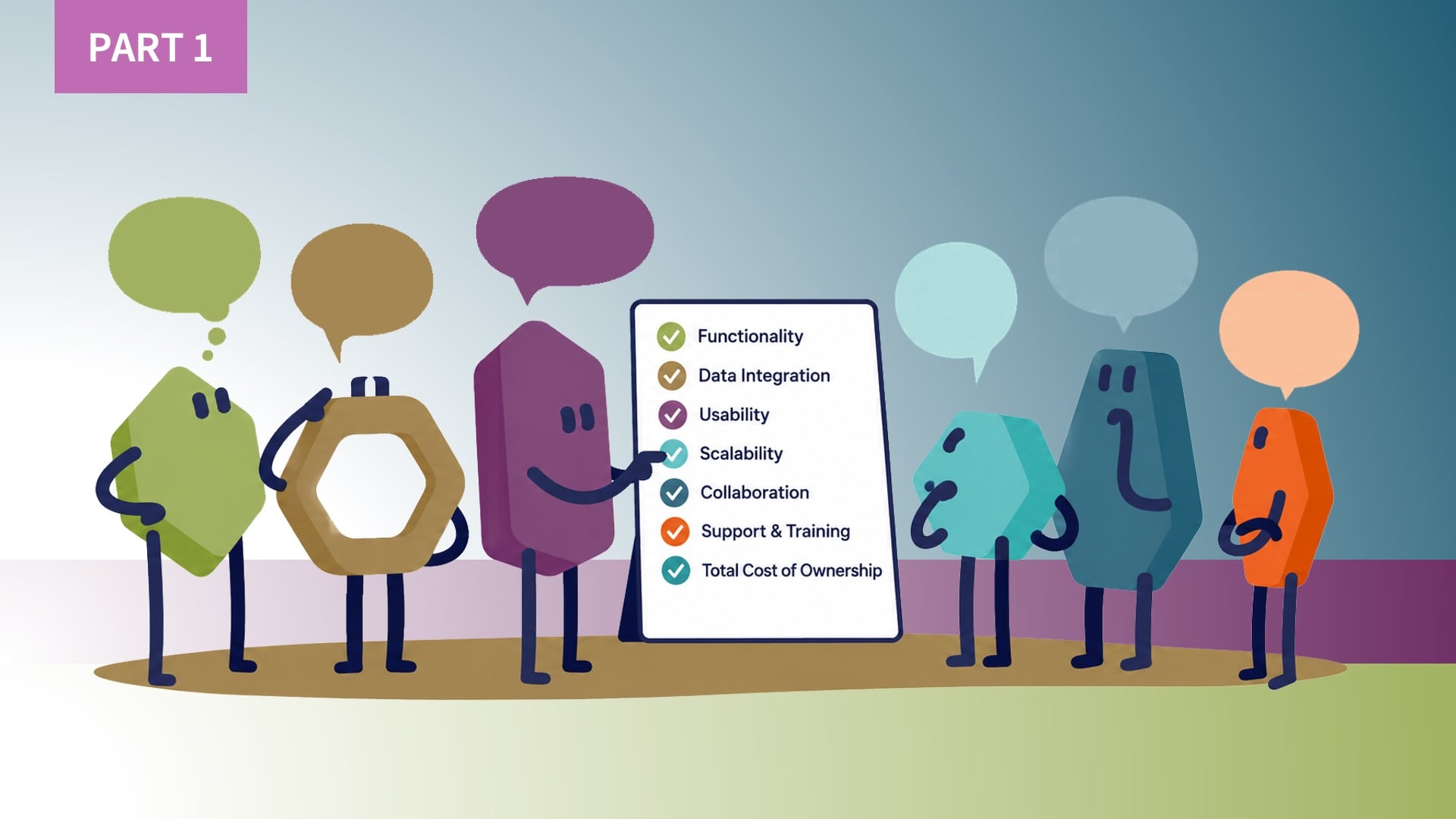
By Jeff Alexander and Chris Katsaros
Choosing the right commercialization planning software for your biopharma drug launch roadmap can determine whether your product reaches patients on schedule or falls behind competitors. With more than 50% of pharmaceutical launches failing to meet revenue expectations in their first year, according to research from the Sedulo Group, the tools you select for planning and execution matter more than ever.
A tailored, multi-year commercialization roadmap that illustrates all stages from pre-clinical through launch is the go-to model. This guide walks you through the essential criteria for evaluating commercialization planning software so you can make informed decisions that support your path to market.
You will learn how to assess platforms based on roadmap depth, budget planning capabilities, cross-functional alignment features, and scenario modeling tools. By the end, you will have a clear framework for selecting software that fits your organization's unique launch requirements.
Key Takeaways: How to Evaluate Biopharma Launch Planning Software
- Roadmap depth matters: Your software should map objectives, activities, timelines, and interdependencies across all commercialization functions from pre-clinical to post-launch.
- Budget planning accuracy directly impacts investor confidence, resource allocation, and your ability to defend commercialization spending decisions.
- Cross-functional alignment features help commercial, medical, regulatory, and market access teams work from a single source of truth.
- Detailed commercialization plans built in days, rather than months, give you more time for strategic decision making.
- Scenario planning capabilities allow you to model tradeoffs and adjust timelines, costs, and hiring plans as new data emerges.
What Is Commercialization Planning Software for Biopharma?
Commercialization planning software is a specialized technology platform designed to help biopharma companies illustrate the complex process of bringing a drug to market. These tools go beyond traditional project management tools by incorporating industry-specific workflows, regulatory milestones, and commercial strategy frameworks.
At its core, this type of software helps you organize the many moving pieces of drug commercialization. You need to coordinate clinical development timelines with market access strategies. You need to align medical affairs activities with commercial launch plans. And you need to do all of this while managing budgets, headcount, and external vendor relationships.
Unlike generic planning tools, biopharma-specific platforms understand the unique cadence of pharmaceutical development. They recognize that commercialization planning must begin years before regulatory approval. They account for the interdependencies between clinical milestones and commercial readiness activities.
Why Traditional Project Management Tools Fall Short for Drug Launches
General-purpose project management platforms lack the domain expertise required for effective drug launch planning. They cannot model the relationship between Phase 3 completion and payer engagement timelines. They do not include pre-populated activities based on industry benchmarks.
When you use generic tools, you spend significant time building frameworks from scratch. Your team must manually map dependencies that experienced commercialization professionals take for granted. This creates delays and increases the risk of overlooking critical activities.
Purpose-built commercialization planning software addresses these gaps by embedding pharmaceutical expertise directly into the platform. The result is faster planning cycles and fewer blind spots in your launch roadmap.
Why Roadmap Depth Should Be Your First Evaluation Criterion
Roadmap depth refers to how thoroughly a platform can capture the full scope of your commercialization journey. A surface-level roadmap that only tracks major milestones will not give you the visibility needed to execute successfully.
Deep roadmaps include granular detail across all functional areas: commercial strategy, medical affairs, regulatory, market access, supply chain, and operations. Each area should break down into specific objectives, activities, owners, timelines, and dependencies.
According to research on commercial readiness, the trajectory of a drug asset is often fixed by choices made during Phase 2. This means your planning software must support early-stage commercialization activities, not just launch execution.
What to Look for in Roadmap Capabilities
Start by asking whether the platform offers pre-populated activity templates based on industry standards. Pre-populated plans reduce the burden of starting from scratch. They also help ensure you do not miss critical activities that experienced launch teams include by default.
Next, evaluate how the software handles interdependencies. In biopharma commercialization, one delayed activity can cascade across multiple workstreams. Your platform should automatically flag downstream impacts when timelines shift.
Finally, assess the level of customization available. While templates accelerate planning, every drug asset has unique characteristics. Your software should allow you to tailor pre-built frameworks to match your specific therapeutic area, indication, and competitive landscape. It should also allow you to import any previous plans and roadmaps your company has to both preserve and use moving forward any historical data.
How to Assess Budget Planning and Resource Allocation Features
Budget planning is one of the most challenging aspects of commercialization, particularly for emerging biopharma companies that may lack historical data on launch costs. Your planning software should include detailed budget capabilities that go beyond simple spreadsheet exports.
Look for platforms that offer itemized cost projections tied to specific activities. Each line item in your commercialization plan should connect to a corresponding budget element. This linkage creates transparency and makes it easier to defend spending decisions to leadership and investors. Out-of-the-box functions should include pre-populated budgets with headcount projections, salary ranges, and operational costs based on industry benchmarks while still allowing for customization on your specific circumstances.
Headcount Planning as Part of Budget Management
Commercial readiness requires building a team with the right capabilities at the right time. Hiring too early burns cash. Hiring too late creates gaps in execution capacity. Your planning software should integrate headcount projections with activity timelines.
Effective platforms show you when specific roles need to be filled based on when their associated activities begin. They should also model the cost implications of different hiring scenarios, helping you balance speed to market against cash runway.
This capability becomes especially important during investor discussions. When you can demonstrate a data-driven approach to resource planning, you build confidence that your commercialization budget is defensible and realistic.
Connecting Budgets to Strategic Tradeoffs
Budget planning is not just about tracking costs. It is about understanding how resource constraints shape strategic options. The best commercialization software helps you model tradeoffs between different investment scenarios.
For example, you might want to compare the cost of building an internal commercial team versus partnering with a contract sales organization. Or you might need to evaluate the budget impact of launching in two geographic markets simultaneously versus sequencing them.
These scenario comparisons require software that links activities, timelines, and costs in a dynamic model. When you change one variable, the downstream financial implications should update automatically.
Why Cross-Functional Alignment Features Matter for Launch Success
Drug launches fail when functional teams operate in silos. Recent research from Beghou indicates that while biopharma teams are doing the right things—building data infrastructure, conducting cross-functional planning—they are not doing them in concert. The result is misaligned timing, uneven visibility, and siloed execution.
Your commercialization planning software should serve as a single source of truth that all functional teams can access and update. This means medical affairs can see how their scientific communication activities connect to commercial launch timelines. It means regulatory can flag potential delays that impact market access strategies.
Look for platforms that offer role-based permissions while maintaining overall visibility. Each team member should be able to focus on their specific responsibilities while still understanding how their work fits into the broader launch plan.
Enabling Collaboration Without Creating Chaos
Collaboration tools need structure to be effective. Unstructured shared documents can create confusion about which version is current and who owns which decisions. Your planning software should include workflow features that clarify ownership and approval processes.
Activity assignment capabilities allow you to designate responsible parties for each element of the commercialization plan. Status tracking shows progress at a glance. Notification systems alert team members when their input is needed or when upstream changes affect their work.
These features reduce the coordination burden on project managers. Instead of spending time chasing updates via email, your team can focus on substantive planning discussions.
Supporting External Stakeholders and Partners
Biopharma commercialization rarely happens entirely in-house. You may work with consulting firms, contract research organizations, specialty agencies, and distribution partners. Your planning software should accommodate external collaborators while protecting sensitive information.
Evaluate how the platform handles permissions for external users. Can you grant limited access to specific sections of the plan? Can you control what partners can view versus edit? These capabilities become essential as your planning network expands.
How to Evaluate Scenario Planning and Modeling Capabilities
Drug development timelines are inherently uncertain. Regulatory decisions can shift by months. Clinical trial results may open new indications or require additional studies. Competitive dynamics can change rapidly. Your commercialization planning software needs robust scenario modeling to handle this uncertainty.
Scenario planning capabilities allow you to create multiple versions of your commercialization roadmap based on different assumptions. You might model an optimistic scenario with fast regulatory approval, a base case scenario, and a conservative scenario with delays.
Modeling Approval Timeline Variations
Regulatory approval dates drive much of your commercialization timing. A six-month delay in approval requires rethinking launch activities, marketing spend, and sales force deployment. A faster-than-expected approval creates pressure to accelerate market readiness.
Your planning software should make it easy to shift approval assumptions and see how the rest of the plan responds. Which activities can be compressed? Which must be extended? What are the cost implications of each scenario?
This capability is particularly valuable during the FDA review period when approval timing remains uncertain. You can prepare contingency plans in advance rather than scrambling to adjust after receiving a decision.
Comparing Strategic Alternatives
Beyond timeline uncertainty, you face strategic choices that benefit from modeling. Should you pursue a specialty distribution strategy or broad retail availability? Should you invest heavily in direct-to-physician promotion or prioritize digital engagement?
Effective planning software helps you compare these alternatives by modeling the activities, timelines, and costs associated with each path. You can evaluate tradeoffs systematically rather than relying on intuition alone.
These comparisons also support stakeholder alignment. When you can show leadership the quantified implications of different strategies, decision-making becomes more transparent and defensible.
How Industry Expertise Gets Embedded in Planning Software
The most valuable commercialization planning platforms incorporate industry expertise directly into their design. This expertise manifests in several ways: pre-populated templates, built-in logic for dependencies, and benchmark data for costs and timelines.
When evaluating software, ask how the platform was developed and what biopharma experience informed its design. Platforms built by teams with deep commercialization backgrounds tend to include nuances that generic tools miss.
The Value of Embedded Tips and Educational Resources
Not everyone on your team has decades of commercialization experience. Early-stage companies especially may be planning their first product launch. Software that includes embedded guidance helps less experienced team members make informed decisions.
Look for platforms that offer contextual tips explaining why certain activities are included and how they connect to other workstreams. These explanations build organizational knowledge and reduce dependence on external consultants for basic planning questions.
Educational resources might include templates, best practice guides, and examples from anonymized case studies. This supporting content accelerates the learning curve for new team members.
Enabling Real-Time Adjustments as Your Plan Evolves
Drug development rarely follows a straight line. Clinical trial results, regulatory feedback, and competitive dynamics can all require plan adjustments. Corval enables real-time updates and scenario adjustments as new data evolves.
When you change assumptions in the platform, timelines, costs, and hiring alignments automatically adjust to reflect the new reality. This dynamic updating eliminates the manual recalculation burden that slows traditional planning processes.
The platform also generates tradeoff scenarios that illustrate the impact of strategic decisions. These scenarios help you communicate implications to leadership and gain alignment on the best path forward.
Steps to Take After Selecting Your Commercialization Planning Software
Choosing a platform is just the beginning. Successful implementation requires thoughtful onboarding and change management. Plan for these activities as part of your overall software selection process.
Start by identifying a core team that will become experts in the new platform. These individuals will train others and establish best practices for how your organization uses the software. Invest in their training early to build internal capability.
Develop guidelines for how plans will be structured and maintained. Consistency across different drug assets makes it easier to compare programs and learn from past launches. Document these standards so new team members can follow established practices.
Measuring Success After Implementation
Define metrics for evaluating whether the software delivers expected value. These might include time savings in plan development, reduction in plan revision cycles, or improved cross-functional alignment scores from team surveys.
Schedule regular check-ins to assess how the platform is being used and identify areas for improvement. Software adoption often starts strong but can decline without ongoing attention. Build accountability mechanisms to sustain usage over time.
Consider how you will capture lessons learned from each launch to improve future planning. Your commercialization software should support this continuous improvement by making it easy to analyze what worked and what could be improved.
In Conclusion: Selecting Software That Supports Your Path to Market
Evaluating biopharma launch planning software requires attention to roadmap depth, budget capabilities, cross-functional alignment features, and scenario planning tools. The right platform accelerates planning, improves team coordination, and helps you make better strategic decisions.
Look for software that embeds pharmaceutical expertise directly into its design. Pre-populated templates, industry benchmarks, and automated dependency tracking reduce the burden of building plans from scratch. These features let you focus on strategic questions rather than administrative details.
As you evaluate options, consider how each platform handles the uncertainty inherent in drug development. Scenario modeling capabilities help you prepare for multiple futures and respond quickly when circumstances change. This flexibility becomes increasingly valuable as you move closer to launch.
The commercialization planning software you select will shape how your organization approaches every future product launch. Take the time to evaluate thoroughly, ask probing questions during demonstrations, and choose a platform that grows with your pipeline.
👉 How to Evaluate Biopharma Launch Planning Software in 2026, Part 2
➡️ See how Corval can build your optimal path to market.
Recent Posts

Subscribe Now
Sign up to receive Corval Clarity—commercialization insights and industry news.